
East Jeju Itinerary: 1 Day from Gimnyeong to Bijarim and Seongsan
Quick answer: For a first trip to eastern Jeju, the most balanced one-day route is Gimnyeong Beach → Sehwa and Pyeongdae coast → Bijarim Forest → Seongsan. It combines the island’s clearest coastal scenery with an easy forest walk and a famous volcanic landmark without spending the whole day inside the car.
I followed this part of the island over several days in May, staying around the northeast coast and moving between Pyeongdae, Sehwa, Gimnyeong, Bijarim, and Seongsan. The route below is the version I would use if I had to compress those stops into one practical day. It is especially good for travelers who want scenery and short walks rather than a packed list of museums or long hikes.
East Jeju itinerary at a glance
| Stop | Best for | Allow | Skip if |
|---|---|---|---|
| Gimnyeong Beach | Clear water and white sand | 30–45 min | The weather is very windy |
| Sehwa and Pyeongdae | Slow coastal drive, cafes, quiet sea views | 60–90 min | You are rushing to Udo |
| Bijarim Forest | Shade, an easy nature walk, rainy-day atmosphere | 60–90 min | You need a fully step-free route |
| Seongsan Ilchulbong | Jeju’s signature volcanic landscape | 60–90 min | Cloud or wind makes the climb unappealing |
| Kim Young Gap Gallery Dumoak | Photography and a quiet indoor alternative | 45–60 min | You want only outdoor sights |
If you can choose only three stops: pick Gimnyeong, Bijarim, and Seongsan. Add Sehwa and Pyeongdae when you want a slower lunch or cafe break. Choose Kim Young Gap Gallery instead of Seongsan when the weather is poor or you have already visited Sunrise Peak.
1. Start at Gimnyeong Beach
Gimnyeong is a better first stop than trying to squeeze every beach on the northeast coast into one morning. The water can look almost transparent over the pale sand, while the black volcanic rocks make the color even more vivid. The beach is compact enough for a short stop and has parking and basic visitor facilities.
Do not plan the whole morning around swimming unless you have checked the seasonal opening and conditions. Outside the official swimming season, I would treat Gimnyeong as a scenic walk and photo stop. The official tourism page also notes that beach operations can change, so check locally before relying on showers or rentals.
2. Follow the coast through Sehwa and Pyeongdae
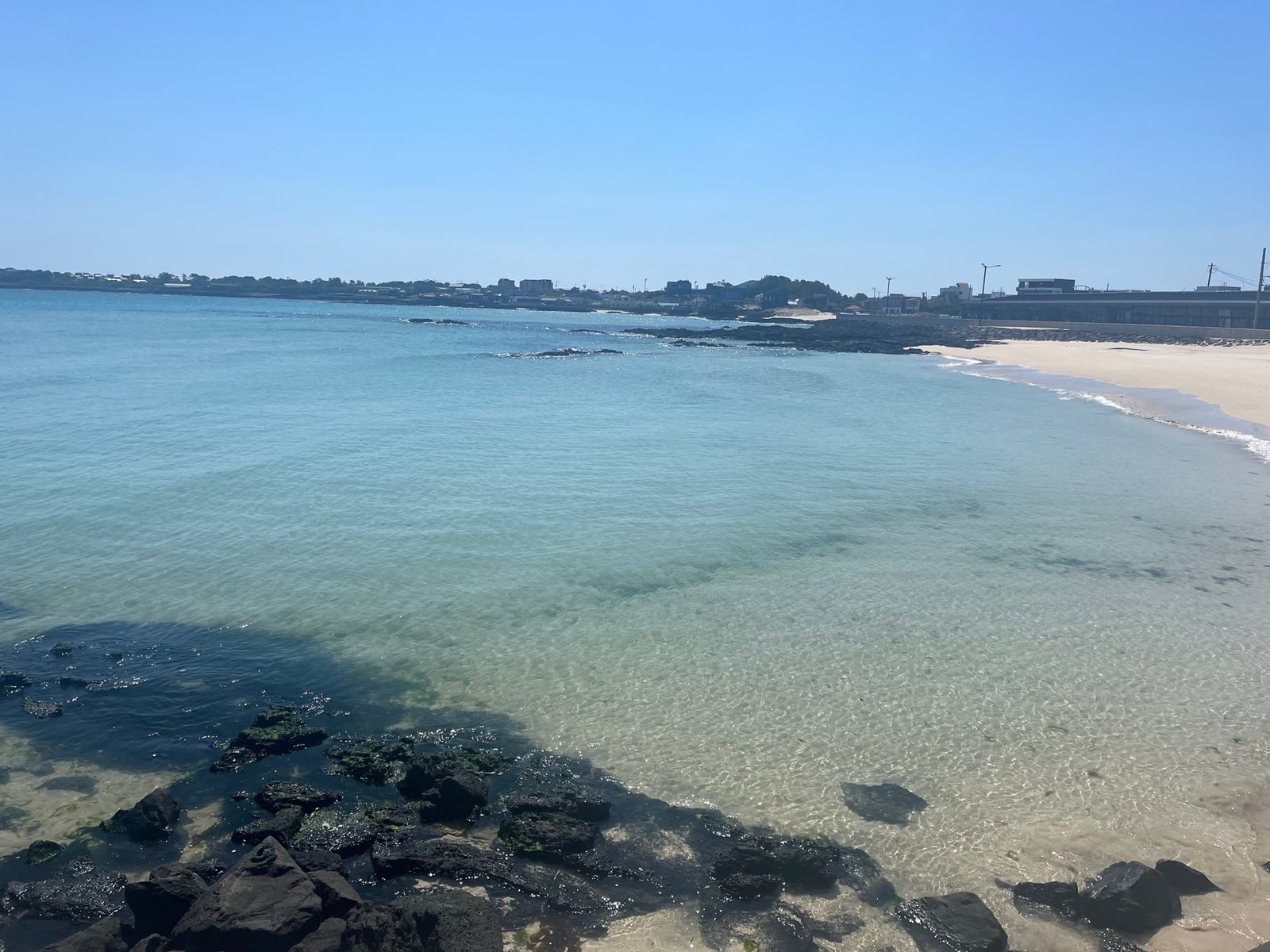
The stretch between Gimnyeong, Pyeongdae, and Sehwa is where the day should slow down. Instead of hopping between beaches for ten-minute photos, choose one section of coast, walk beside the water, and stop for lunch or coffee. This part of Jeju felt quieter than the major attraction zones, and the low villages and black-stone shoreline made the drive itself part of the experience.
Sehwa is the more convenient stop if you want restaurants and a market area. Pyeongdae works better when you mainly want a calm sea view. Search the Korean names 세화해변 and 평대리 in Naver Map or KakaoMap; Korean navigation apps are usually more reliable than Google Maps for detailed driving and business information in Korea.
3. Walk under the trees at Bijarim Forest
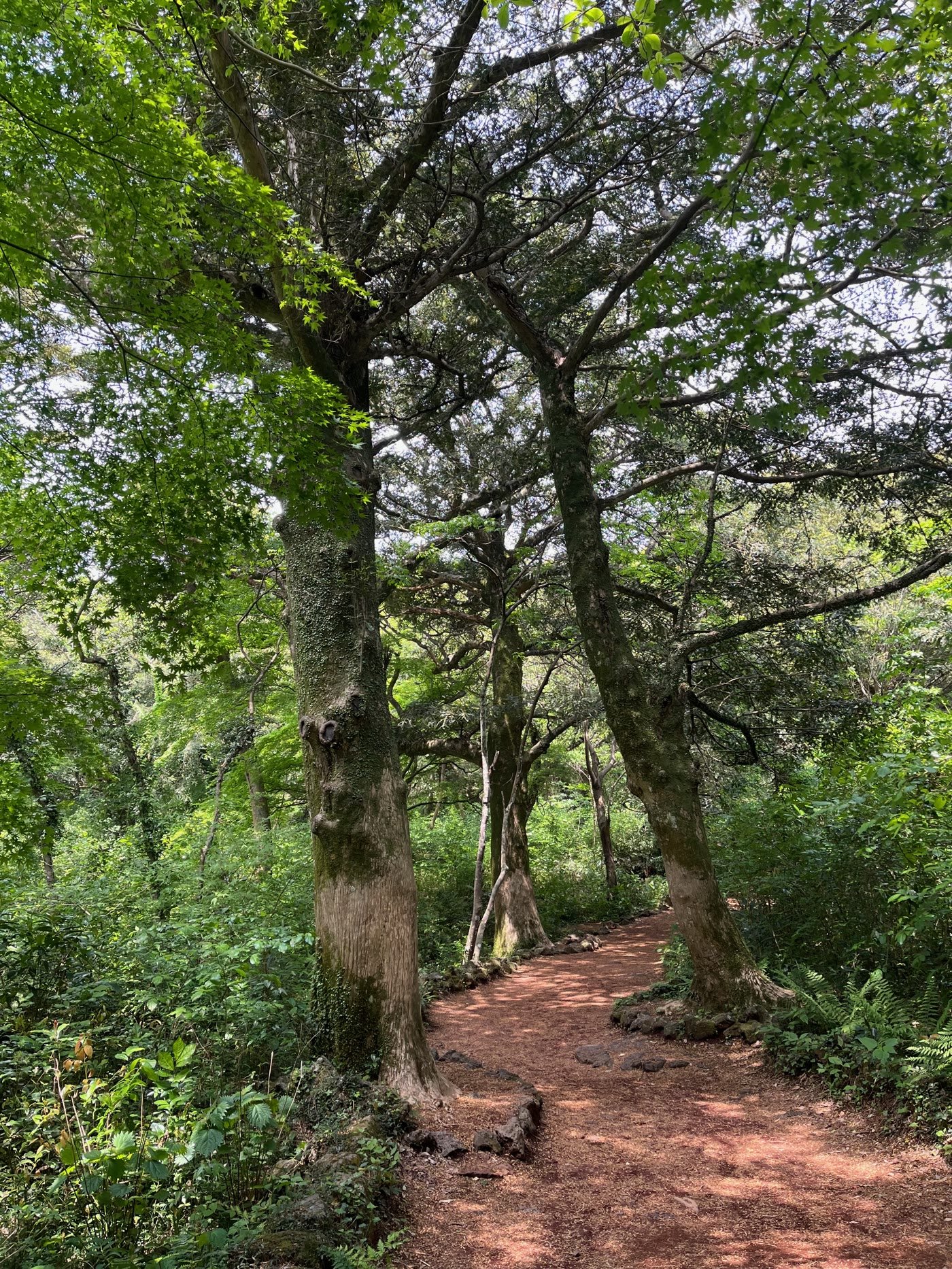
Bijarim is the stop that makes this route feel varied rather than like a sequence of beaches. The forest is known for its old nutmeg trees, and the official Visit Jeju guide describes two walking options, Courses A and B. You do not need hiking equipment, but the natural surface can be uneven and damp.
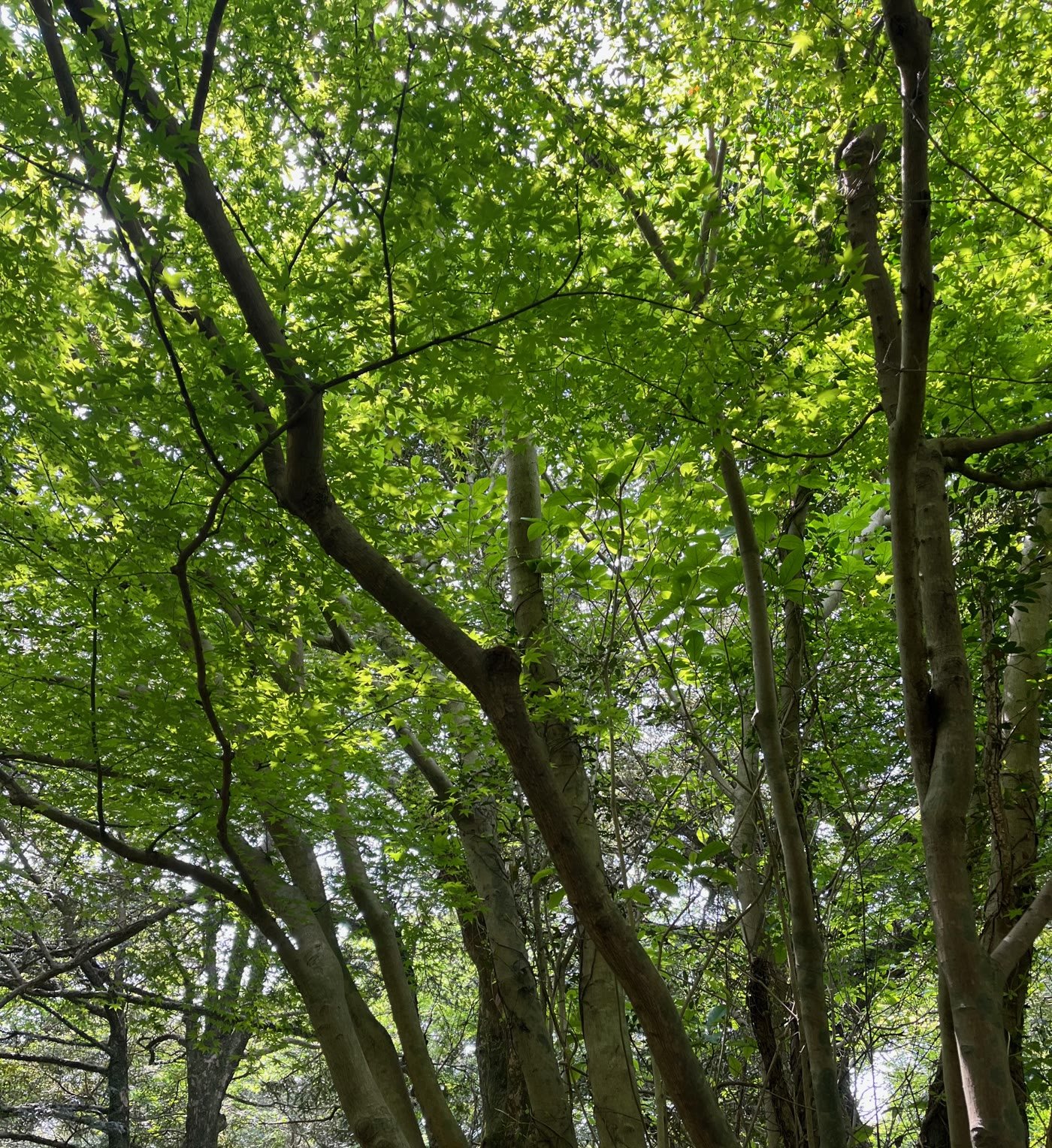
I would allow at least an hour. The canopy is the main attraction, so there is no need to race toward a single viewpoint. Even on a bright day the interior feels cool and shaded, and after rain the darker trunks and red-brown trail should be especially atmospheric.
Practical note: Wear shoes with grip rather than smooth city sandals. Check the official attraction page on the morning of your visit for current admission, last-entry time, and weather-related restrictions instead of relying on an old blog timetable.
4. Finish with Seongsan—or choose the gallery
Seongsan Ilchulbong is the obvious finish if this is your first visit to Jeju. Put it late in the day rather than first if you prefer a relaxed coastal morning, but leave enough daylight for the climb. If your main goal is sunrise, reverse the entire route: begin at Seongsan, then drive north through Sehwa and finish at Gimnyeong.
If the wind, rain, or your energy level makes another outdoor climb unattractive, drive south to Kim Young Gap Gallery Dumoak. The gallery occupies a former school and presents Kim Young Gap’s photographs of Jeju’s oreum, coastal landscapes, haenyeo, and rural life. It is not just a weather backup: the photographs add context to the landscapes you have been driving through.
Best route by travel style
For a first-time visitor
Gimnyeong → Sehwa lunch → Bijarim → Seongsan. This gives you the clearest mix of beach, village, forest, and volcanic scenery.
For a slow trip
Pyeongdae morning → long lunch in Sehwa → Bijarim → Kim Young Gap Gallery. Skip the climb and spend more time in each place.
For bad weather
Check Bijarim conditions first, take only a brief coastal drive, then prioritize the gallery. Do not force Seongsan when strong wind or poor visibility removes the main reason to climb.
Without a rental car
Use Sehwa as the base and reduce the plan to two major stops. Buses connect the eastern villages, but transfers and waiting time make the full driving route unrealistic in one day. Check the current route in KakaoMap or Naver Map on the day of travel.
What to bring
East Jeju weather can change quickly between the exposed coast and the shaded forest. I would carry a light rain layer, water, and a charged phone rather than a large daypack.
Affiliate disclosure: As an Amazon Associate, Hey K-Travel earns from qualifying purchases.
- Packable rain jacket — useful when the coast is windy and Bijarim is damp.
- Compact USB-C power bank — navigation and photos drain a phone quickly during a driving day.
Common planning mistakes
- Adding Udo to this same day. The ferry and island deserve their own half or full day.
- Trying to stop at every beach. Gimnyeong, Woljeongri, Pyeongdae, and Sehwa begin to blur together when visited too quickly.
- Trusting old opening hours. Forest, gallery, and seasonal beach operations can change.
- Underestimating wind. A clear forecast does not mean the coast will feel calm.
- Using only English place names. Save the Korean names in your map app before leaving your hotel.
Frequently asked questions
Can I do East Jeju in one day?
Yes, if you choose three or four stops and have a rental car. Gimnyeong, Sehwa or Pyeongdae, Bijarim, and Seongsan form a logical one-day route.
Is Bijarim Forest worth visiting?
Yes if you enjoy easy nature walks and want a contrast to Jeju’s coast. It is less suitable for travelers looking for a dramatic summit or a fully paved urban park.
Should I stay in Jeju City or Seongsan?
Stay near Seongsan or Gujwa for the most relaxed version of this itinerary. From Jeju City, begin early and expect more driving at the start and end of the day.
What should I pair with this route on a second day?
Use a second day for Udo and Seongsan, or move to the south and west coast. For a detailed west-side stop, see our first-hand guide to Yongmeori Coast.
My final recommendation
If you have only one day, keep the route simple: one beach, one village stop, one forest, and one major finish. My pick is Gimnyeong → Sehwa → Bijarim → Seongsan. It captures four distinct versions of eastern Jeju without turning the trip into a checklist.
Planning references: Visit Jeju: Gimnyeong Beach, Visit Jeju: Bijarim Forest, and Visit Jeju: Kim Young Gap Gallery Dumoak. Verify current conditions directly before visiting.