What to Eat in Hoi An: Cao Lau, White Rose and 4 More Foods
If you are wondering what to eat in Hoi An, start with cao lầu and White Rose dumplings. They are the two dishes most closely tied to the city, and they also make an easy first dinner in the Ancient Town. Then add Hội An chicken rice, bánh mì, mì Quảng and a few shared dishes if you have more meals to spare.
I visited Hoi An in December 2024 during a Da Nang trip and tried the first two specialties at 188 Hoa Vang Restaurant in the Ancient Town. This guide separates what I personally ordered from the other local dishes that are worth adding to your itinerary, so you can plan one meal or a full food day without over-ordering.
Hoi An food: the quick answer
| Dish | What it is | Best for |
|---|---|---|
| Cao lầu | Chewy noodles, pork, greens and crisp rice crackers with a small amount of sauce | Your first Hoi An meal |
| White Rose | Delicate steamed rice dumplings with a savory filling and fried shallots | Sharing as a starter |
| Cơm gà Hội An | Fragrant rice with shredded chicken, herbs and pickled vegetables | A simple lunch |
| Bánh mì | A crisp baguette filled with meat, pâté, vegetables, herbs and sauce | A quick, inexpensive meal |
| Mì Quảng | Broad turmeric-tinted noodles with meat or seafood, herbs, peanuts and a little broth | Comparing Central Vietnamese noodles |
| Shared seafood or soup | A table dish such as clams or a clear noodle soup | Groups and mixed appetites |
Short on time? Order one bowl of cao lầu per person and one plate of White Rose dumplings for the table. That combination gives you two distinctly Hoi An dishes without turning dinner into a checklist.
1. Cao lầu: the essential Hoi An noodle dish
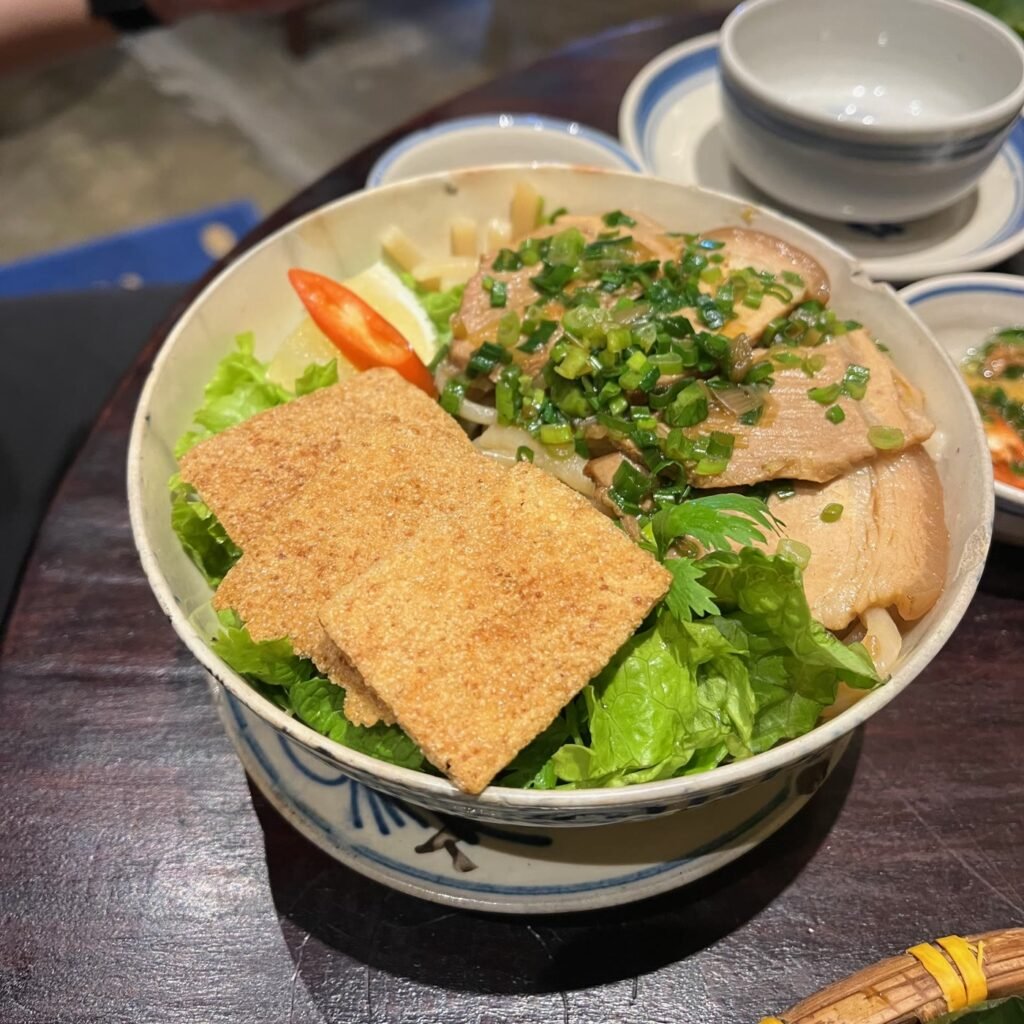
Cao lầu is the dish I would prioritize if you can eat only once in Hoi An. It looks a little like a dry noodle bowl rather than a soup: thick noodles sit under sliced pork, fresh greens and crisp rice crackers, with just enough sauce to coat everything after mixing.
The bowl I tried had a useful contrast of textures. The noodles were firm and substantial, the greens kept it fresh, and the crackers softened gradually as they picked up the sauce. It was filling without being heavy, especially compared with a large bowl of noodle soup.
You may see elaborate stories about the exact water or ash traditionally used to make cao lầu noodles. Those details are part of the dish’s local identity, but as a traveler the more practical point is simple: this is not just another version of phở. Its texture, modest amount of liquid and crisp topping make it noticeably different.
- How to eat it: mix the noodles, pork, greens, sauce and crackers before deciding whether it needs extra chili.
- Who will like it: travelers who prefer dry or lightly sauced noodles over a large bowl of broth.
- Ordering tip: treat cao lầu as an individual main dish rather than one shared plate.
2. White Rose dumplings: the best dish to share
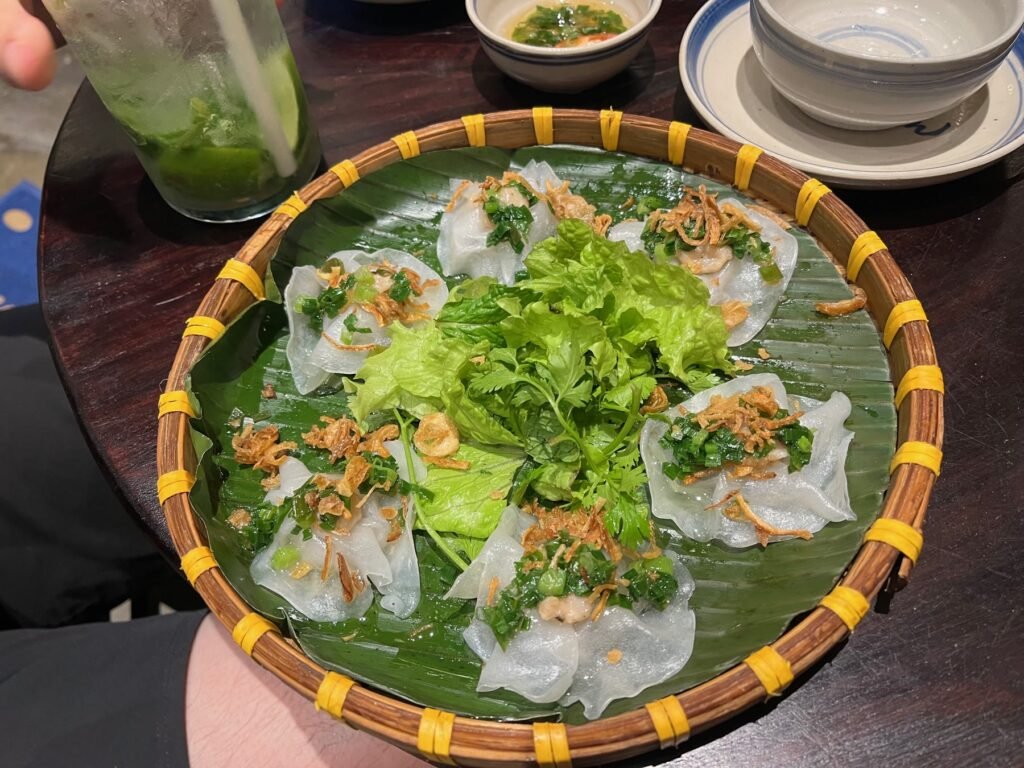
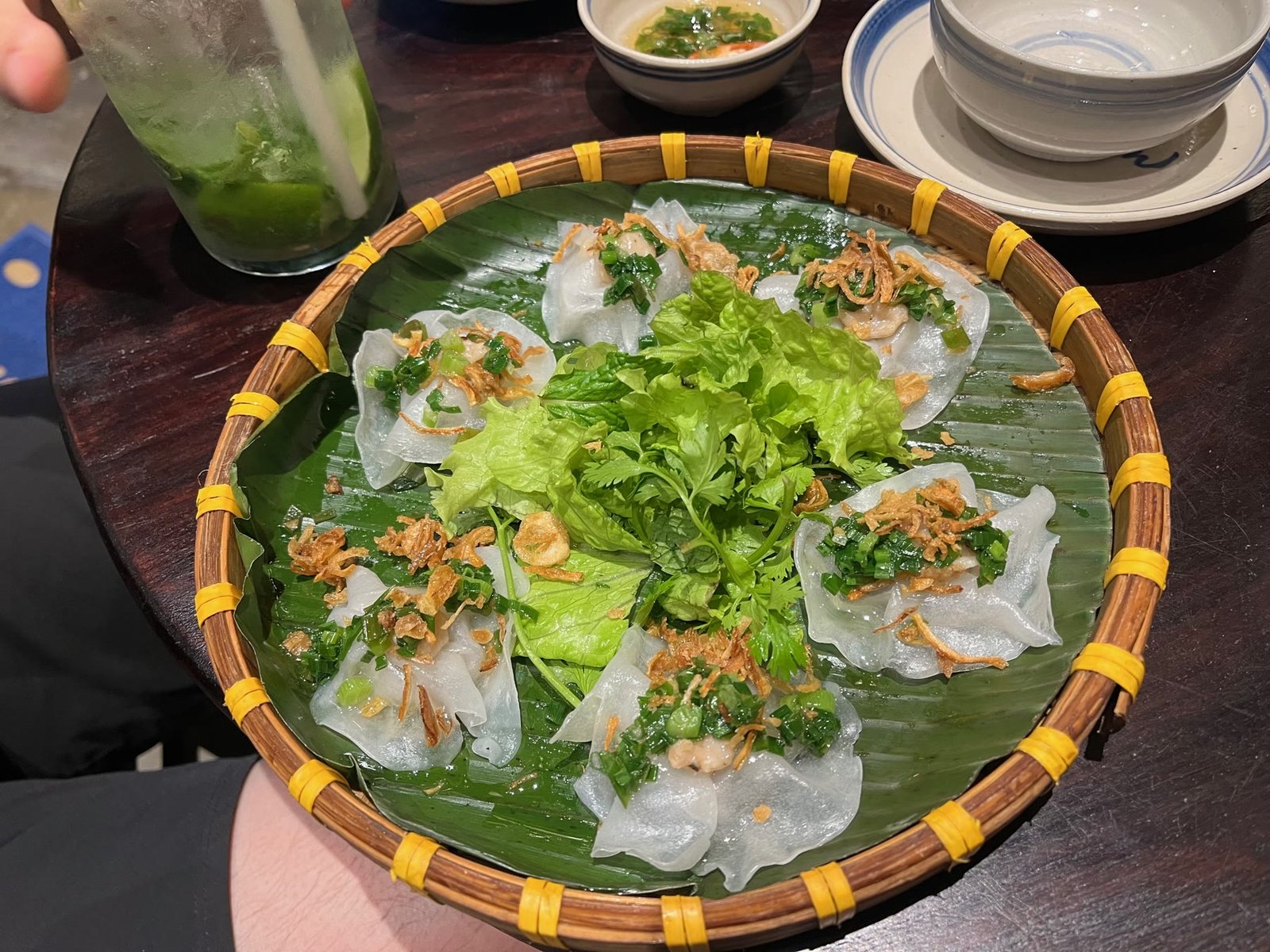
White Rose dumplings, called bánh bao bánh vạc, are Hoi An’s most recognizable appetizer. The steamed rice wrappers are translucent and folded into a flower-like shape, which explains the English name. The filling is savory, while fried shallots and scallion oil add texture and richness.
The plate we ordered worked best as a shared starter. The wrappers were soft and slightly chewy, and the fried topping kept the dish from feeling too delicate. They are lighter than fried wontons and easy to split between two or three people before the noodle bowls arrive.
One useful expectation: White Rose is more about subtle texture than a powerful hit of spice. Try one with the toppings first, then add the dipping sauce gradually. Pouring too much sauce over the whole plate can overwhelm the wrapper and filling.
3. Cơm gà Hội An: chicken rice for an easy lunch
Hoi An chicken rice is a strong choice when you want a straightforward lunch between sightseeing stops. The usual plate combines seasoned rice, shredded or chopped chicken, herbs, onion and pickled vegetables. A small bowl of broth or sauce may come on the side.
I did not order cơm gà on this visit, so I would not rank a specific restaurant from personal experience. Still, it belongs on a Hoi An food shortlist because it offers a completely different format from cao lầu and White Rose. It is also easier to fit into a busy day than a long multi-course dinner.
Look for a busy specialist shop with steady turnover, and decide whether you prefer shredded chicken or larger pieces before ordering. If you are sensitive to herbs, ask what comes mixed into the plate rather than removing everything after it arrives.
4. Bánh mì: the practical breakfast or snack
Bánh mì is not unique to Hoi An, but the city is one of the easiest places to build it into a travel day. A good sandwich gives you a crisp baguette, rich filling, crunchy vegetables, herbs and sauce in one portable meal. It works for breakfast, a quick lunch or a snack before an evening walk.
The famous shops can attract lines, especially around standard meal times. A long queue is not automatically necessary for a good sandwich. If you have only one evening in town, I would spend the prime lantern hours walking rather than waiting a long time for a single famous counter. Go earlier, later, or choose a well-reviewed shop near your route.
- Ask for less chili if you are unsure about the house sauce.
- Eat it soon after purchase so the baguette stays crisp.
- Carry tissues; generously filled sandwiches can be messy.
5. Mì Quảng: another Central Vietnamese noodle bowl
Mì Quảng is associated with Quảng Nam and the wider Da Nang–Hoi An region, so it deserves a place on a Central Vietnam trip even though it is not exclusive to the Ancient Town. It usually combines broad noodles with pork, chicken, shrimp or another topping, plus herbs, peanuts, crisp rice crackers and a shallow amount of intensely flavored broth.
If your itinerary includes both cities, try cao lầu in Hoi An and save mì Quảng for Da Nang. That spreads the food experiences across the trip and makes the comparison easier. Cao lầu is generally the more Hoi An-specific priority; mì Quảng gives you a broader taste of the region.
For a complete Da Nang and Hoi An route, see my relaxed three-day Da Nang and Hoi An itinerary.
My dinner at 188 Hoa Vang Restaurant
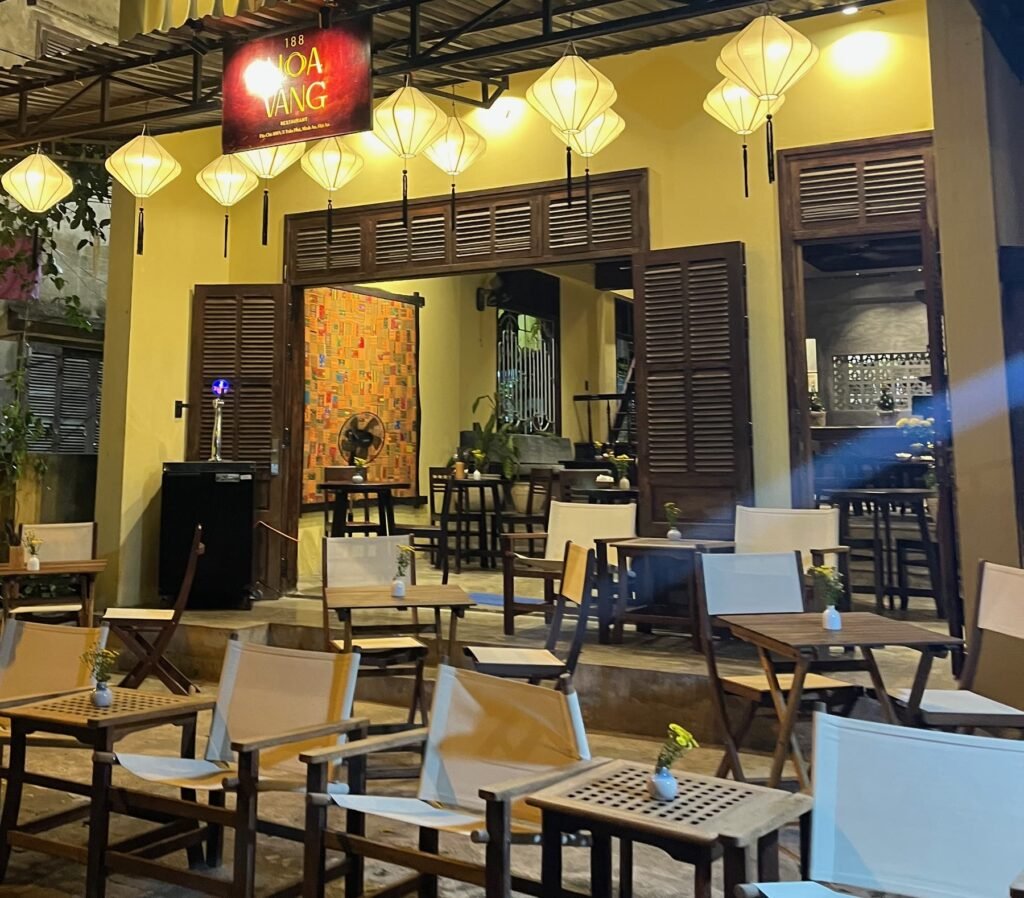
We ate at 188 Hoa Vang Restaurant, at 188A/5 Trần Phú in Hoi An’s Minh An area, during our December 2024 evening visit. Its central location made it convenient to combine dinner with an Ancient Town walk instead of arranging another ride between the restaurant and the lantern area.
Our table included cao lầu and White Rose dumplings, the two dishes I would recommend ordering first. We also added a clear beef noodle soup and clams in a light broth. Those extra dishes are not uniquely Hoi An specialties, but they made sense for a group because not everyone had to order the same noodle bowl.
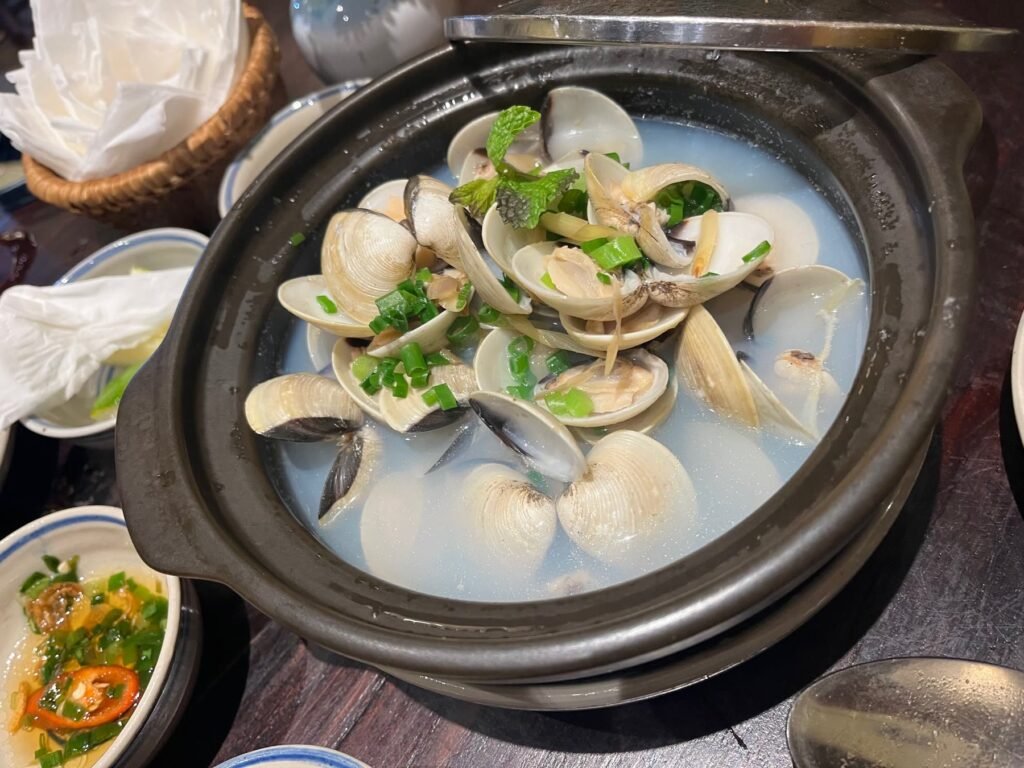
I would use Hoa Vang as one practical option rather than claim it is the single best restaurant in Hoi An. Restaurant hours, menus and ownership details can change, so confirm the current listing before making a special trip. If you are already walking through the Ancient Town, however, the location makes it easy to inspect the menu and decide on the spot.
How to plan one Hoi An food evening
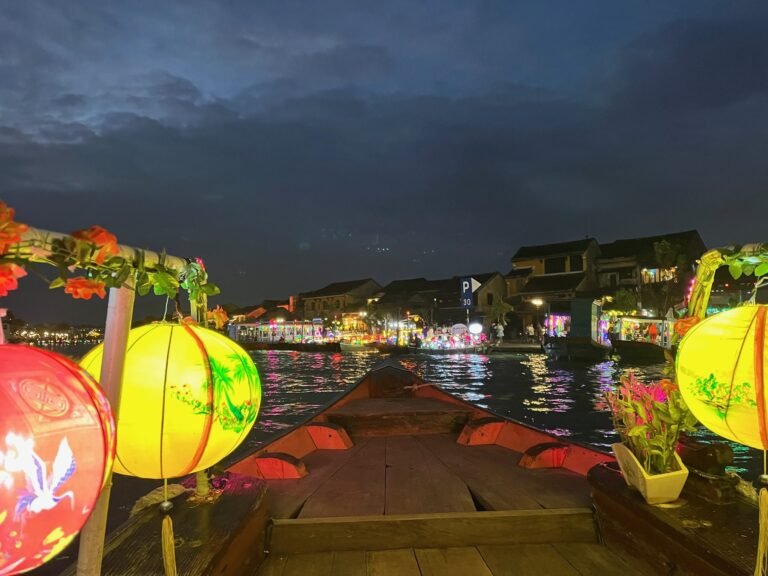
A simple evening works better than trying to eat every specialty at once. Arrive before the streets become busiest, walk through the Ancient Town while there is still some daylight, and have dinner before or after the peak lantern period depending on your appetite.
- Late afternoon: arrive in Hoi An and take a short walk through the yellow streets.
- First bite: split a bánh mì only if you are genuinely hungry; otherwise save room.
- Dinner: order cao lầu per person and White Rose for the table. Add one soup or shared vegetable or seafood dish for a group.
- After dinner: walk by the river and lantern streets rather than immediately ordering another full meal.
- Dessert: choose a small local sweet or drink only if you still have room.
My separate guide to Hoi An at night from Da Nang covers arrival timing, the Ancient Town, lanterns and return transport in more detail.
What to order for different group sizes
Solo traveler: one cao lầu is enough for the essential experience. Add bánh mì at another time rather than ordering several mains at once.
Two people: order two noodle or rice mains plus one White Rose plate to share. Choose different mains if you want to compare dishes.
Three or four people: add one or two shared dishes such as vegetables, clams or soup. This is the easiest group size for tasting several foods without waste.
Common Hoi An food questions
What food is Hoi An most famous for?
Cao lầu and White Rose dumplings are the two dishes most closely associated with Hoi An. Cơm gà Hội An is another local staple, while mì Quảng represents the wider Quảng Nam region.
What should I eat if I have only one meal?
Choose cao lầu as your main dish and share White Rose dumplings as a starter. This gives you two distinctive Hoi An foods in one meal without ordering too much.
Is Hoi An food spicy?
Many dishes are not intensely spicy when served, but chili sauce and fresh chili may be available at the table. Taste the dish before adding condiments, especially with subtle foods such as White Rose dumplings.
Should I eat in Hoi An or return to Da Nang for dinner?
Eat in Hoi An if you are visiting in the late afternoon or evening. Dinner makes the trip feel less rushed and lets you stay for the lantern atmosphere. If you are choosing where to base yourself, compare the tradeoffs in my guide to where to stay in Da Nang, the beach resort area or Hoi An.
Final recommendation
For a first Hoi An food experience, keep the plan focused: cao lầu for the main dish, White Rose dumplings to share, and one additional dish only if your group wants more variety. Add cơm gà, bánh mì or mì Quảng on later meals rather than forcing every specialty into one evening.
That approach leaves enough time and appetite to enjoy the Ancient Town itself—which is the reason Hoi An food feels especially memorable after dark.